Navigating the modern career landscape can feel like trying to chart a course through a constantly shifting sea. With new industries emerging, traditional roles evolving, and the sheer volume of information available, understanding exactly what you want to do and how to get there is a monumental task. This is where robust Job Role Exploration & Descriptions becomes your most powerful compass, moving beyond generic titles to uncover the true essence of a profession and whether it aligns with your unique trajectory.
It’s more than just scanning job ads; it’s an investigative journey into the daily realities, required skills, and growth pathways of roles that genuinely pique your interest. This deep dive helps you make informed decisions, tailor your development, and ultimately, find a career that not only pays the bills but truly fulfills you.
At a Glance: Key Takeaways for Your Career Journey
- Move Beyond Titles: Focus on duties, impact, and required skills, not just the job title itself.
- Self-Reflection is Gold: Understand your core skills, interests, and values before diving into roles.
- Deconstruct Job Descriptions: Learn to read between the lines to uncover a role's true nature and company expectations.
- Embrace Niche Examples: Using specific, detailed roles (like Exploration Geologist vs. Engineer) reveals the subtle but crucial differences.
- Skills are Dynamic: Identify gaps and proactively develop the capabilities needed for your desired roles.
- Networking is Exploration: Conversations with professionals offer invaluable real-world insights into job roles.
- Your Career is a Marathon: Expect an iterative process of learning, adapting, and growing.
Why Job Role Exploration Matters (More Than Ever)
In an age of rapid technological advancement and global shifts, yesterday's dream job might be obsolete tomorrow, and entirely new opportunities are continually emerging. Relying on outdated notions or vague ideas about what a job entails is a recipe for career dissatisfaction. Effective job role exploration is your proactive shield against falling into a role that doesn't fit, leading to burnout or a lack of engagement. It’s about building a career by design, not by default.
Think of it as forensic science for your professional future. You’re dissecting the components of various roles to see how they tick, what problems they solve, and what kind of person thrives within them. This isn't just for job seekers; it's a continuous process for anyone looking to pivot, grow, or simply ensure they're on the right path.
Your Personal GPS: A Framework for Role Exploration
Effective job exploration isn't haphazard; it's a structured journey. We'll break it down into three interconnected steps, helping you triangulate your ideal professional destination.
Step 1: Self-Assessment – Knowing Your North Star
Before you can effectively explore external roles, you need a crystal-clear understanding of your internal landscape. What are you bringing to the table? What genuinely excites you? What kind of work environment makes you thrive?
- Skills Audit (Hard & Soft): Make a comprehensive list. Hard skills might include proficiency in Python, geological modeling software, or project management tools. Soft skills are equally crucial: problem-solving, communication, teamwork, adaptability, and critical thinking. Be honest about where you excel and where you have room to grow.
- Interests & Passions: What topics do you find yourself drawn to? What types of challenges energize you? If you love complex puzzles, data analysis might be a fit. If you're passionate about environmental stewardship, roles in sustainability could be appealing. Aligning your work with your passions drastically increases job satisfaction.
- Values & Work-Life Priorities: Do you prioritize innovation, stability, social impact, or a flexible schedule? Do you prefer working remotely, in a field setting, or in a traditional office? Understanding your non-negotiables helps filter out roles that might look good on paper but wouldn't serve your overall well-being. This self-reflection lays a strong foundation for strategic career pathing.
Step 2: Industry Deep Dive – Mapping the Terrain
Once you know yourself, it's time to look outward. Which industries are experiencing growth? Where do your skills and interests intersect with market demand?
- Identifying Promising Sectors: Research industries that align with your broad interests. For example, if you're inclined towards resource management, explore mining, oil & gas, renewable energy, or environmental consulting. Look for trends: what technologies are disrupting these fields?
- Market Trends and Growth Areas: Use resources like government labor statistics, industry reports, and professional publications to understand where the jobs are and where they're heading. Are certain skills becoming obsolete while others are exploding in demand? This insight helps you prioritize which skills to develop, contributing to cultivating in-demand skills.
- Key Players and Company Culture: Within your target industries, identify leading companies. Research their values, recent projects, and employee reviews (e.g., Glassdoor, LinkedIn). The culture of a company significantly impacts your day-to-day experience; a role that's perfect on paper can be miserable in the wrong environment.
Step 3: Role Definition – Zooming In on the Destination
Now, it's time to get specific. This is where you connect your self-assessment with industry opportunities, focusing on individual job roles.
- Deconstructing Job Descriptions: Beyond Buzzwords: A job description is more than a checklist; it's a window into an organization's needs. Pay attention to the verbs used in responsibilities, the frequency of certain requirements, and the implied challenges. We'll delve deeper into this shortly.
- The Power of Informational Interviews: This is arguably the most valuable exploration tool. Reach out to people working in roles that interest you. Ask them about their daily tasks, challenges, career path, what they love, and what they find difficult. These conversations provide unfiltered, real-world insights no job description can offer.
- Shadowing and Experiential Learning: If possible, try to shadow someone for a day or take on a short-term project or internship in a target role. There's no substitute for direct experience to confirm if a role aligns with your expectations.
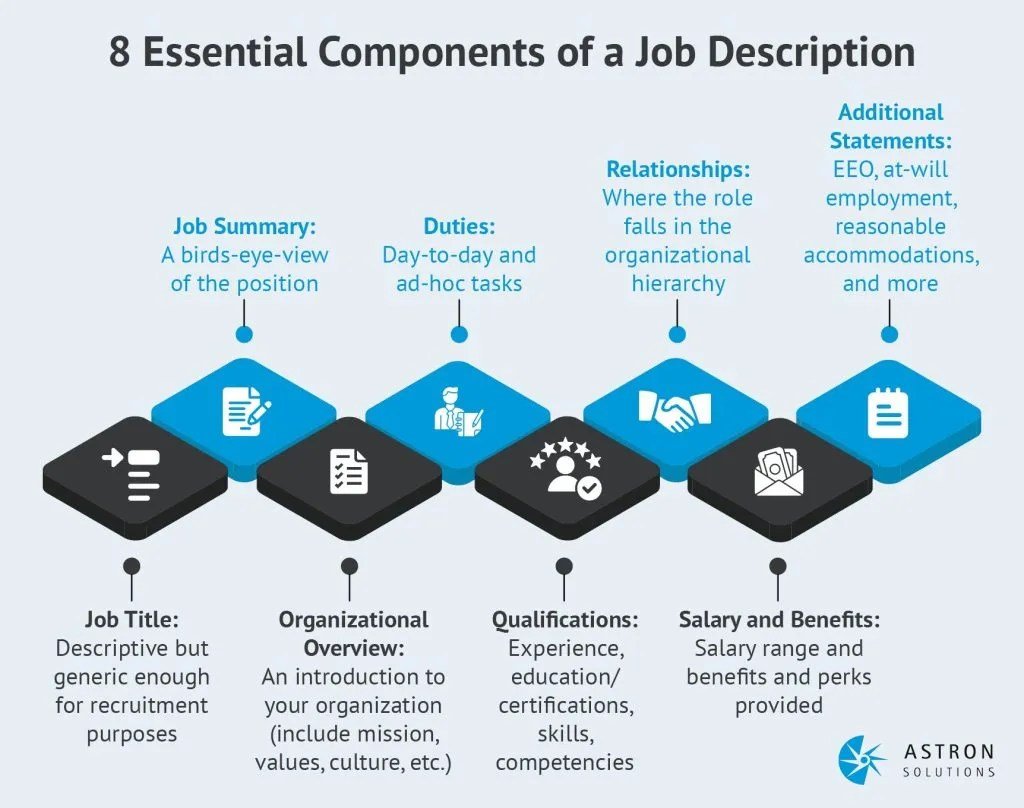
The Anatomy of a Job Description: What to Really Look For
Many people skim job descriptions, looking for keywords that match their resume. A seasoned explorer reads them like a treasure map, identifying clues to the role's true nature, the company's priorities, and the unwritten expectations.
- Responsibilities & Duties: The Daily Grind: This section describes what you'll actually be doing. Don't just read the bullet points; imagine yourself performing those tasks. Do they align with your skills and interests? For example, "Prepare and present reports on geological findings" isn't just about data; it implies strong communication and presentation skills are essential. Look for variety: is it mostly repetitive, or does it involve diverse challenges?
- Qualifications & Skills: Your Toolkit: This lists the specific education, experience, and proficiencies required. Separate "required" from "preferred." If you meet most "required" skills and a few "preferred," you're likely a viable candidate. Focus on quantifiable achievements in your own experience that demonstrate these skills.
- Preferred vs. Required: The Nuance: "Required" means you must have it. "Preferred" means it's a bonus. Don't let a few "preferred" skills deter you if you meet the core requirements. Conversely, if you lack a critical "required" skill, you might need to reconsider or focus on acquiring it.
- Company Culture & Environment: The Vibe Check: Often conveyed subtly, this section might mention "collaborative team," "fast-paced environment," or "independent work." These phrases offer clues about the workplace dynamic. If you prefer autonomy, a highly collaborative setting might be draining. If you thrive on quick decisions, a bureaucratic process could be frustrating.
Case Study: Navigating Niche Roles in Resource Exploration
To illustrate the nuances of job role exploration and description analysis, let's dive into two closely related, yet distinct, roles within the resource exploration industry. These examples highlight how subtle differences in responsibilities, required skills, and qualifications can lead to profoundly different career paths.
Spotlight: The Exploration Geologist
An Exploration Geologist is the detective of the earth, uncovering nature's hidden treasures. Their primary mission is to locate and evaluate mineral, oil, and gas deposits, translating geological mysteries into actionable insights for resource development. They are fundamentally scientists, driven by the earth's story.
Key Facets of the Role:
- Core Responsibilities: Much of their work involves field studies and surveys – hands-on data collection, often in remote or challenging environments. They are the ones with boots on the ground, literally. Following this, they analyze and interpret geological data using specialized software, developing geological models and maps. Their input is crucial for drilling teams, where they provide geological guidance. A significant part of their job is preparing and presenting reports on their findings, assessing economic feasibility, and ensuring environmental and safety compliance.
- Essential Skills & Qualifications: A strong academic background is non-negotiable, typically a Bachelor's or Advanced degree in Geology, Earth Sciences, or a related field. Field experience is paramount. They need deep proficiency in geological modeling software, data analysis, and interpretation, along with knowledge of remote sensing and GIS technology. A profound understanding of geological principles, processes, sedimentology, stratigraphy, and geochemistry forms their scientific bedrock. Beyond technical expertise, they require strong analytical, problem-solving, organizational, and project management skills, coupled with excellent communication and report-writing abilities. The willingness to travel and work in remote environments is a job requirement, not just a preference. Experience with environmental impact assessments and knowledge of HSE regulations rounds out their profile.
- The "Why" of the Role: They fuel the discovery pipeline, supporting responsible and efficient resource development. Their work directly impacts global energy and material supplies.
Spotlight: The Exploration Engineer
While also focused on identifying and evaluating new resource deposits, an Exploration Engineer brings a more applied, problem-solving, and often project-management-oriented lens to the same goal. They are critical in translating geological potential into commercially viable, sustainable projects.
Key Facets of the Role:
- Core Responsibilities: Similar to geologists, they conduct geological surveys and analyze data, but often with an emphasis on the how of extraction and viability. They leverage advanced imaging and mapping technologies to locate resources. A key difference lies in their involvement in evaluating the feasibility and economic viability of new projects from an engineering perspective, and developing and overseeing drilling and sampling programs. They often collaborate extensively with geologists and environmental scientists, acting as a bridge between scientific discovery and practical application. They also focus heavily on environmental regulations and safety standards, and monitor and evaluate the performance of exploration tools and equipment.
- Essential Skills & Qualifications: An Engineering Bachelor's degree (potentially with a Master's in Geology or Environmental Science) is typically required, highlighting the emphasis on engineering principles. They often need 3-5 years of experience directly in exploration. Proficiency in GIS and remote sensing is shared, but their data analysis often leans towards tools like MATLAB or R, alongside geological software. Strong project management skills are explicitly listed, reflecting their role in orchestrating exploration activities. Experience in offshore or remote fieldwork is common. Knowledge of environmental regulations and a proven track record of successful resource discoveries are often desired.
- The "Why" of the Role: They translate scientific potential into practical, safe, and economically viable extraction methods, ensuring sustainable resource development.
Comparing the Two: Where Geology Meets Engineering
| Feature | Exploration Geologist | Exploration Engineer |
|---|---|---|
| Primary Focus | Scientific discovery, understanding earth processes, data interpretation. | Applied problem-solving, project feasibility, operational efficiency, resource assessment. |
| Typical Degree | Geology, Earth Sciences | Engineering, often with a Geology/Environmental Science Master's |
| Core Mentality | Detective, scientist, interpreter of natural systems | Planner, problem-solver, implementer, project manager |
| Key Output | Geological models, maps, scientific reports, resource estimates | Feasibility studies, drilling programs, operational plans, economic assessments |
| Software Emphasis | Geological modeling, data interpretation | Data analysis (MATLAB, R), engineering simulation, project management tools |
| Fieldwork Emphasis | Data collection, geological mapping, sample analysis | Overseeing drilling/sampling, equipment monitoring, site assessment |
| Decision-Making Input | What is there? Where is it? How was it formed? | Can we extract it? How will we extract it safely/efficiently? Is it commercially viable? |
| This comparison clearly shows that while both roles operate in the same industry and even share some tools (GIS, remote sensing), their fundamental approach, daily tasks, and ultimate contribution differ significantly. An Exploration Geologist might be asking "Why is this resource here?" while an Exploration Engineer is asking "How can we get it out safely and profitably?" Understanding these distinctions is paramount when you're exploring roles. You can find more targeted insights for your journey if you Explore the Occupation Generator for personalized career suggestions. |
Building Your Bridge: Turning Exploration into Action
You've explored, you've reflected, you've deconstructed. Now, how do you translate that knowledge into tangible career progress?
Filling Skill Gaps: Learning and Development
Once you identify target roles, you'll likely uncover areas where your skills don't perfectly align. This is an opportunity, not a roadblock.
- Online Courses & Certifications: Platforms like Coursera, edX, and LinkedIn Learning offer specialized courses. Look for industry-recognized certifications relevant to your desired field.
- Bootcamps & Workshops: For intensive skill development, especially in tech or data analysis, bootcamps can be transformative.
- Volunteer Work & Side Projects: Practical experience is invaluable. Volunteer for projects that allow you to apply new skills, or start a personal project to build a portfolio.
- Mentorship: A mentor in your target field can guide your learning, recommend resources, and even open doors.
Tailoring Your Narrative: Resume & Interview Prep
With clarity on your target roles, you can effectively present your unique value.
- Crafting an Impactful Resume: No more generic resumes! Tailor your resume to each specific job description, highlighting relevant skills and experiences. Use keywords from the job posting. Quantify your achievements whenever possible (e.g., "Reduced project timelines by 15%," not just "Managed projects"). This focused approach is key to crafting an impactful resume.
- Interview Preparation: Your exploration journey provides the perfect foundation. Anticipate questions based on the job description and the insights you've gained from informational interviews. Prepare STAR method (Situation, Task, Action, Result) stories for common behavioral questions. Demonstrate your understanding of the role's challenges and how your skills can provide solutions.
Networking: Connecting the Dots
Networking isn't just about finding a job; it's an ongoing process of learning and relationship building.
- Professional Organizations: Join groups relevant to your target industry or role. They offer conferences, workshops, and invaluable networking opportunities.
- LinkedIn: Connect with professionals in your desired roles. Engage with their content, ask thoughtful questions, and leverage it for informational interviews.
- Industry Events: Attend webinars, conferences, and meetups. These are excellent places to meet people and stay abreast of industry trends.
Common Pitfalls to Avoid in Your Job Search
Even the most diligent explorers can stumble. Being aware of common missteps can save you time and frustration.
- Getting Stuck on Titles: A job title can be misleading. A "Marketing Specialist" at one company might be a "Marketing Coordinator" at another, with very similar responsibilities. Focus on the duties and impact, not just the label.
- Ignoring Soft Skills: While technical skills get you in the door, soft skills like adaptability, emotional intelligence, and teamwork often determine your success and longevity in a role. Many job descriptions subtly emphasize these through phrases like "collaborates effectively" or "problem-solving mindset."
- Underestimating Company Culture: A poor cultural fit is a major reason for job dissatisfaction. Don't overlook the clues about environment, values, and team dynamics found in job descriptions, company websites, and interviews.
- Neglecting Continuous Learning: The job market is dynamic. What's in demand today might evolve tomorrow. Treat job role exploration as an ongoing process, regularly assessing your skills against market needs.
Your Journey Forward: Strategic Career Navigation
Job role exploration isn't a one-time event; it's a lifelong skill. The world of work is constantly evolving, and so should your understanding of where you fit within it. By consciously engaging with the process of understanding job descriptions, conducting thorough self-assessments, diving deep into industries, and building genuine connections, you're not just finding a job—you're strategically designing a fulfilling career path.
Embrace the journey with curiosity and a proactive mindset. The more you understand the landscape of opportunities, the better equipped you'll be to navigate your own unique and rewarding professional adventure.